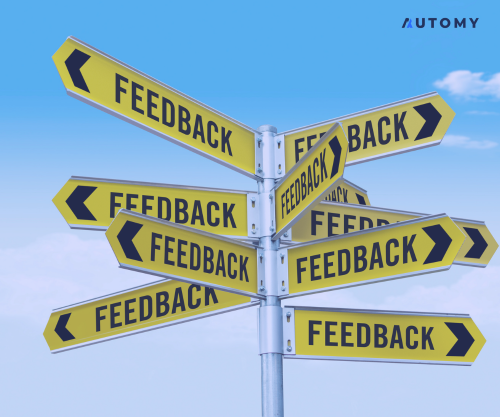
A business team needs a contract in place before critical maintenance can begin. Legal asks for the scope of work, service terms, owners, and dates. The answers come in pieces: Procurement has one version, Operations confirms another, and no one is sure who should complete the request. It looks as though the contract is stuck with Legal, but the information needed to move forward sits across several teams.
That delay is more than administrative friction. It can push back a strategic purchase, the start of a service, or a decision that depends on the agreement. And once the contract is signed, another question arises: who tracks the commitments it contains? Contract management automation should start with that coordination challenge, not just faster drafting. The goal is to give Legal the context it needs at intake and make sure obligations remain visible after signature.
Incomplete requests turn Legal into an information coordinator
The requesting team understands the business need, but may not know how to express it as information Legal can use to draft an agreement. Legal understands the implications of a clause, but someone else must confirm the operational facts: what will be delivered, where, when, who will accept the work, and what happens if the scope changes. When those answers are scattered across email threads, review turns into a series of follow-up questions.
The answer is not to ask Operations to write legal language. It is to ask questions Operations can answer: “Will the vendor need access to our facilities?” “Will work take place outside normal hours?” “Who will confirm that the service was performed?” Those answers help Legal assess which terms may be relevant without handing over its professional judgment.
Nor should Legal own every part of the request. The business team should own the need and scope; Procurement should confirm the commercial terms within its remit; and Legal should handle legal analysis and the appropriate approvals. Without clear boundaries, every request for clarification can feel like another team's delay.
Research points to a coordination gap, not just a document problem
A 2025 Deloitte study of contract lifecycle management involving 49 organizations, mostly based in France with some international participants, identifies manual processes, scattered documents, difficult collaboration, and limited visibility into key dates and obligations. In that sample, 31% of respondents did not know the exact number of active contracts managed by their department. That finding describes the study participants; it is not a global estimate or a benchmark for every company.
The World Commerce & Contracting Benchmark Report 2025 highlights a related issue: unclear accountability for the quality and integrity of the contracting process. The report draws a distinction between carrying out a task and owning the process as a whole. That matters when a request moves through Legal, Procurement, and a business team—or when a contractual commitment must be fulfilled after signature.
Neither study proves that software alone can fix these issues. Together, they illustrate a recognizable pattern: contracts can be stored in one place while ownership, complete information, and follow-through remain unclear.
A contract delay can hold up decisions beyond Legal
Consider a maintenance agreement for a manufacturing plant. Operations needs to define the equipment and service window; Procurement needs to confirm vendor terms; and Legal needs to assess risk, responsibilities, and contract language. If the scope is incomplete, no one can confidently assess the final version. Signing may be delayed, and the operating schedule may need to change. This is a possible scenario, not a claim that a particular company lost money or that every delay will stop production.
The day-to-day burden is real even when there is no dramatic outcome. Legal asks again for information that could have been collected up front. The requesting team receives a mix of technical and legal questions without knowing which ones it should answer. The person coordinating the request has to determine which draft is current and explain why the agreement is still pending. That work consumes attention that could go toward the issues each team is best equipped to resolve.
To understand the impact in a particular organization, track when a contract was requested, how often it was returned for missing information, how many handoffs it required, when Legal received a review-ready request, and when the agreement was ready for signature. Separating waiting time from review and decision time shows where the bottleneck actually sits instead of blaming the last team to touch the file.
After signature, the cost of inaction takes a different form
A signed contract does not mean the work is done. It may include deliverables, acceptance criteria, notice periods, renewals, service commitments, or actions assigned to different departments. If those details remain only in a document, follow-through depends on someone remembering to read it, record the obligation, and alert the right person.
The consequence is not always a penalty. A renewal may be reviewed too late, evidence needed to verify a service may be missing, or no one may have confirmed who owns a commitment. The financial exposure depends on the agreement and what actually happens. Legal, tax, and regulatory requirements—and their consequences—vary by jurisdiction and require professional review.
The useful question is not simply “Where is the PDF?” It is “Which commitments are still open, who needs to act, and what evidence will show the work was done?” Without that view, Legal may have to reopen the same agreement to reconstruct facts other teams know better. Business teams, meanwhile, may discover an outstanding commitment only when they are asked to explain what happened.
Better contract management starts before you choose a tool
First, establish a consistent way to submit contract requests. Guided intake can tailor questions to the type of agreement: purpose, counterparty, scope, facility access, handling of information, milestones, owners, and supporting documents. The questions should use business language; Legal defines what it needs to review the request.
Next, agree on what makes a request complete. If the scope is missing, route it back to the person who can clarify it. If a commercial term needs an exception, involve Procurement. If a sensitive condition appears, send it to Legal before it enters a draft. Each return should say what is missing and who needs to respond, rather than starting the conversation over.
Signature creates another handoff. For each relevant obligation, capture the source language, required action, responsible team, trigger date or condition, and evidence needed to confirm completion. Putting an ownerless obligation on a calendar does not resolve it. The process also needs a way to handle changes, disagreements, and cases that do not fit the standard rules.
That design separates three kinds of work. Deterministic rules can check required fields, dates, and predefined approval paths. AI can read a request or agreement, extract information, classify the case, compare it against supplied criteria, and prepare a proposed next step. People confirm the business facts, validate legal interpretations, resolve exceptions, and authorize decisions where required. AI should not decide on its own which legal risks the organization will accept.
How AUTOMY can help without replacing Legal's judgment
AUTOMY describes contract management capabilities that include guided intake, draft preparation, clause selection, legal review, approvals, and obligation tracking. Putting them to work requires each organization to configure its process, approved templates, and role boundaries. The product page describes capabilities, not guaranteed customer outcomes.
At intake, a workflow can collect answers from the requesting team and direct missing information to the right owner. With approved templates and criteria, AI can prepare information or a draft for review and flag details that need attention. A rule can prevent an approval from moving forward until a required confirmation is provided. Legal evaluates the terms, decides how to handle sensitive clauses, and approves the appropriate language.
After signature, AI can help identify potential obligations and dates in the agreement. Designated people validate what was extracted and assign ownership. The process can then make owners, dates, and follow-up actions visible, routing exceptions to the people who can address them. The point is not to promise that every breach will be prevented. It is to reduce reliance on informal reminders to know what needs attention.
The question shifts from “How do we draft faster?” to “How do we get the right information to Legal and follow through on what we signed?” That is the difference between speeding up one task and coordinating the full contract lifecycle.
What to measure to know whether the process is improving
Before making changes, establish a baseline: requests returned for missing information, time until a request is ready for legal review, cases with no clear owner, validated obligations with an assigned owner, and commitments flagged for attention before they are due. There is no need to invent a universal target. Agree on what each measure means and compare like with like.
Review the results with Legal and the requesting teams. If fewer requests are returned but obligations still have no owner, the bottleneck has moved; it has not been solved. If the intake questions confuse the people answering them, revise the questions together. Progress means seeing where work stalls and addressing that point, not simply celebrating that more documents are digital.
Do your contracts stall before signature or lose momentum afterward? Explore AUTOMY's approach to contract management and consider how it fits the responsibilities of Legal and your business teams.
Frequently asked questions
Does contract management automation mean Legal stops reviewing contracts?
No. Automation can prepare information, organize requests, and route approvals. Legal still owns the legal review and the sensitive decisions the organization assigns to it.
How can a business team provide input without choosing legal clauses?
It answers questions about the actual work: scope, deadlines, access, deliverables, and owners. Legal uses those facts to assess the terms and approve relevant clauses.
Can AI identify every obligation in a contract on its own?
AI can help read the agreement and extract potential obligations. A person must validate the context, interpretation, owner, and dates before follow-up is activated.
What if the contract has already been signed?
Its commitments can still be reviewed and turned into actions with an owner, date, and expected evidence, provided the document is available and the extracted details are validated.
Which process should we review first?
Start with one where requests repeatedly come back for missing information or post-signature follow-up relies on personal reminders. Confirm its importance, owners, and applicable local requirements before choosing.
Stop letting contracts become operational surprises.
Automate contract intake, approvals, obligations, renewals and risk alerts with AI agents, workflows and RPA — all in one platform.
Explore Contract Automation